
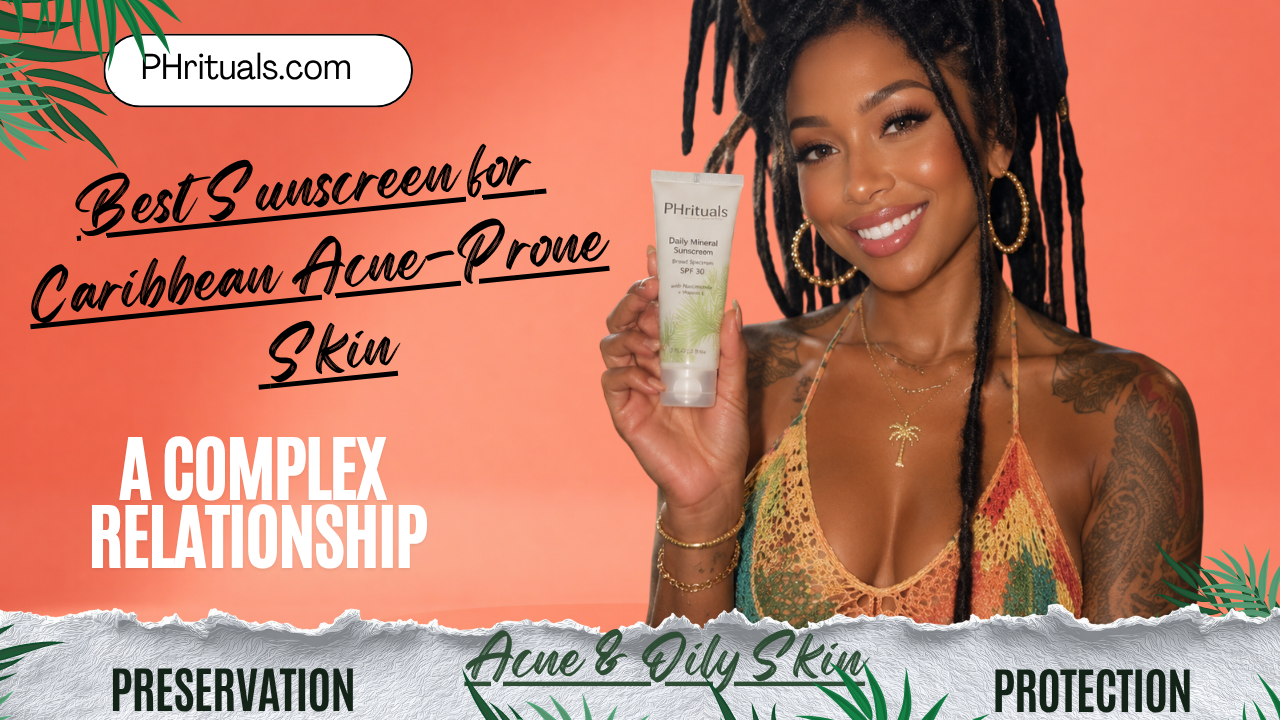
What Sunscreens Are Best for Caribbean Acne-Prone Skin? Acne-prone skin in the Caribbean needs lightweight, non-comedogenic sunscreens that protect without clogging pores or leaving a white cast. Explore the best SPF options for melanin-rich skin.
The Caribbean Sun and Acne: A Complex Relationship
In tropical climates like Jamaica, intense UV exposure, humidity, and heat make sunscreen not just an option, but a daily necessity—especially for those with acne-prone, melanin-rich skin. However, many still avoid SPF due to:
- Greasy textures
- Breakouts after use
- White or purple casts on dark skin
- Cultural myths (e.g., “Black skin doesn’t need sunscreen”)
But here’s the truth: UV rays darken hyperpigmentation, trigger inflammation, and accelerate skin aging—all of which worsen acne outcomes.
Choosing the right sunscreen is vital for clearing breakouts, preventing post-acne marks, and maintaining an even tone in Caribbean weather.
What to Look for in a Caribbean-Friendly Acne Sunscreen
| Feature | Why It Matters |
|---|---|
| Non-comedogenic | Won’t clog pores or trigger breakouts |
| Oil-free or matte finish | Helps manage sweat and sebum |
| Broad-spectrum (UVA/UVB) | Protects against pigmentation and aging |
| SPF 30 or higher | Adequate daily protection for strong sun exposure |
| No white cast | Crucial for melanin-rich skin aesthetics |
| Water-resistant | Withstands humidity and perspiration |
| Fragrance-free or hypoallergenic | Reduces risk of irritation or flare-ups |
Best Types of Sunscreens for Acne-Prone Skin
1. Mineral (Physical) Sunscreens
Contain zinc oxide or titanium dioxide. Reflect UV rays rather than absorb them.
Pros:
- Soothing for sensitive skin
- Naturally antimicrobial (zinc)
- Less likely to irritate inflamed or broken skin
Cons:
- Often leave a white cast—look for tinted or micronized formulas
2. Chemical Sunscreens
Use ingredients like avobenzone, octinoxate, octocrylene, or Tinosorb S to absorb UV rays.
Pros:
- Lightweight, blendable, easier to apply
- Often more cosmetically elegant on deeper skin tones
Cons:
- May irritate sensitive or inflamed acne
- Can sting around eyes or on broken skin
Top Sunscreen Recommendations for Caribbean Acne-Prone Skin
🔹 Black Girl Sunscreen SPF 30 / SPF 45 Matte
- Designed for melanin-rich skin
- No white cast
- Shea butter and avocado oil base (hydrating but may be rich for oily skin)
- SPF 45 Matte version is better for acne-prone skin due to mattifying agents
🔹 La Roche-Posay Anthelios Clear Skin SPF 60
- Broad-spectrum, oil-free, matte finish
- Designed for oily and acne-prone skin
- Chemical-based but fragrance-free
🔹 ISDIN Eryfotona Actinica SPF 50+
- Zinc oxide-based with added DNA-repair enzymes
- Lightweight and non-comedogenic
- No white cast when blended well
🔹 Neutrogena Hydro Boost Water Gel Lotion SPF 30/50
- Chemical sunscreen with hydrating hyaluronic acid
- Lightweight and cooling on skin
- Better for combination skin types in humid conditions
🔹 Supergoop! Unseen Sunscreen SPF 40
- Completely invisible formula
- Oil-free, scent-free, and works as a makeup primer
- Ideal for acne-prone skin of all tones
Local + Regional Considerations
In Jamaica and the wider Caribbean, sunscreen accessibility depends on:
- Import availability at pharmacies and beauty supply stores (Fontana, Monarch, etc.)
- Cost, which may affect consistency of use
- Cultural awareness, which is increasing but still evolving among youth and older generations
PHrituals Tip: Look for dermatologist-recommended brands, and educate clients that sunscreen prevents dark spots, not just sunburn.
Sunscreen Myths Among Caribbean Users
| Myth | Truth |
|---|---|
| “I have melanin, I don’t need sunscreen.” | Melanin offers some UV protection—but not enough to prevent PIH or skin damage. |
| “Sunscreen clogs pores.” | Only some formulations do. Acne-safe options are available. |
| “I only need SPF when the sun is out.” | UV rays penetrate clouds and windows—use SPF daily. |
PHrituals Insight: Protecting the Glow, Every Day
Sunscreen is more than a layer of protection—it’s a ritual of preservation. For melanin-rich, acne-prone skin in Caribbean climates, the right sunscreen prevents pigmentation, supports healing, and strengthens your skin’s natural resilience.
At PHrituals, we honor the radiance of Caribbean skin by offering evidence-based, culturally respectful advice. Your glow deserves protection without compromise—daily, effortlessly, and without a cast in sight.
References
- Alexis, A. F., & Grimes, P. E. (2010). Sunscreens for ethnic skin. Dermatologic Clinics, 28(1), 29–34.
- Draelos, Z. D. (2011). The science behind sunscreens. Journal of Cosmetic Dermatology, 10(1), 1–10.
- Taylor, S. C., & Cook-Bolden, F. (2006). Acne and skin of color. Journal of the American Academy of Dermatology, 55(5), 819–830.
- Lim, H. W., Arellano-Mendoza, M. I., & Stengel, F. (2019). Current sunscreen controversies: a critical review. Photodermatology, Photoimmunology & Photomedicine, 35(6), 341–346.