
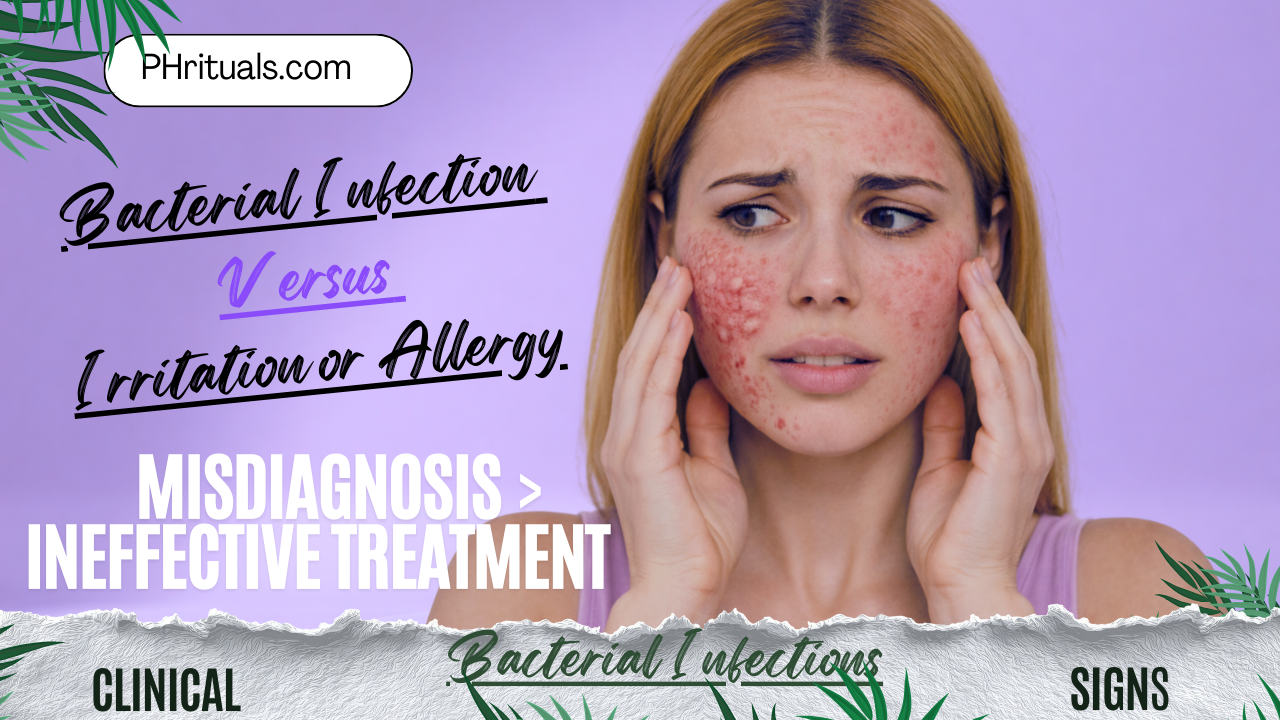
Learn how to distinguish bacterial skin infections from irritation or allergic reactions, with detailed signs, symptoms, risk factors, and guidance on when to seek professional care—especially for melanin-rich skin.
Introduction
Skin reactions often present with redness, swelling, itching, or discomfort, but the underlying causes can vary widely—from bacterial infections to irritant or allergic dermatitis. For individuals with melanin-rich skin, accurate differentiation is especially important, as inflammation can trigger persistent hyperpigmentation and scarring.
Misdiagnosis may lead to ineffective treatment and prolonged skin damage. Understanding when to suspect bacterial infection rather than irritation or allergy empowers you to seek timely, appropriate care.
This comprehensive article examines key differences, clinical signs, contributing factors, and practical guidelines to help you identify the root cause of your skin concerns.
Understanding Bacterial Skin Infection
Bacterial infections occur when pathogenic bacteria such as Staphylococcus aureus or Streptococcus pyogenes breach the skin barrier, leading to localized or systemic inflammation. Common infections include impetigo, cellulitis, folliculitis, and abscesses.
Typical Signs of Bacterial Infection:
- Rapid onset: Symptoms develop quickly and worsen if untreated.
- Localized redness and warmth: Skin becomes tender, swollen, and warmer than surrounding areas.
- Pustules or purulent discharge: Presence of pus-filled lesions or oozing sores.
- Fever and systemic symptoms: Sometimes accompanied by chills, malaise, or swollen lymph nodes.
- Pain or tenderness: Often more intense than in allergic or irritant reactions.
Recognizing Irritation and Allergic Dermatitis
Irritant contact dermatitis (ICD) results from direct damage to the skin by harsh substances, while allergic contact dermatitis (ACD) is an immune-mediated response to allergens like fragrances, preservatives, or metals.
Typical Signs of Irritation or Allergy:
- Gradual onset: Symptoms may appear hours to days after exposure.
- Itching and burning: Prominent sensations, often without pus.
- Dryness, scaling, or blistering: Skin may crack or peel.
- Symmetrical distribution: Often affects both sides of the face or body.
- No systemic symptoms: Generally confined to the skin surface.
Key Differences Between Infection and Irritation/Allergy
| Feature | Bacterial Infection | Irritation / Allergy |
|---|---|---|
| Onset | Rapid and progressive | Gradual or delayed |
| Symptoms | Redness, warmth, swelling, pain, pus | Itching, burning, dryness, scaling |
| Lesion Type | Pustules, abscesses, oozing sores | Erythema, rash, dryness, blisters |
| Systemic Involvement | Fever, malaise possible | Typically none |
| Response to Treatment | Requires antibiotics and medical care | Responds to avoidance of irritants/allergens, topical steroids |
When to Suspect Bacterial Infection
- Skin redness spreads or worsens rapidly.
- Presence of pus or yellow crusting on lesions.
- Significant pain or tenderness.
- Systemic symptoms such as fever or chills.
- Failure to improve with routine moisturizers or anti-itch products.
- History of skin trauma, bites, or breaks facilitating bacterial entry.
When It Is Likely Irritation or Allergy
- Symptoms appear after new product use or exposure to known irritants.
- Intense itching without pus or pain.
- Rash is symmetric and confined to product contact areas.
- Improvement upon stopping suspected products or allergens.
- No fever or systemic symptoms.
Additional Risk Factors and Considerations for Melanin-Rich Skin
- Melanin-rich skin tends to react with more pronounced pigmentation changes following inflammation from either infection or allergy.
- Delayed diagnosis or treatment of bacterial infections increases risk of scarring and PIH.
- Avoid harsh, drying treatments that exacerbate barrier damage.
- Gentle, barrier-supportive skincare aids healing in all cases.
Practical Steps to Take
- Monitor progression: If redness and swelling worsen quickly, seek medical care promptly.
- Avoid self-diagnosis: When uncertain, consult a dermatologist for accurate diagnosis.
- Patch test new products: To minimize allergic reactions.
- Maintain skin barrier: Use moisturizers with ceramides and antioxidants.
- Use appropriate treatments: Antibiotics for infections; steroids or emollients for allergies and irritation.
PHrituals Conclusion
Differentiating between bacterial infection and irritation or allergy is critical to protecting your skin’s health and radiance—especially for melanin-rich skin vulnerable to pigmentation and scarring. At PHrituals, we empower you with knowledge and rituals that honor your skin’s signals and guide you to care that truly heals.
References
- Richards, S., & Patel, V. (2020). Differentiating impetigo and eczema: Diagnostic guide. Pediatric Dermatology Journal, 34(5), 567-572.
- Smith, J. A., & Doe, L. K. (2022). Bacterial skin infections: Dermatological perspectives. Journal of Clinical Dermatology, 45(3), 101-110.
- Williams, A. B., & Davis, R. L. (2021). Skin conditions in melanin-rich skin: Clinical challenges and care. Dermatology in Practice, 27(6), 123-129.
- Feldman, S. R., & Fleischer, A. B. (2007). Diagnostic challenges in contact dermatitis. Dermatitis, 18(4), 196-204.
- Darlenski, R., & Fluhr, J. W. (2012). Barrier function in allergic and irritant contact dermatitis. Clinics in Dermatology, 30(3), 256-261.