
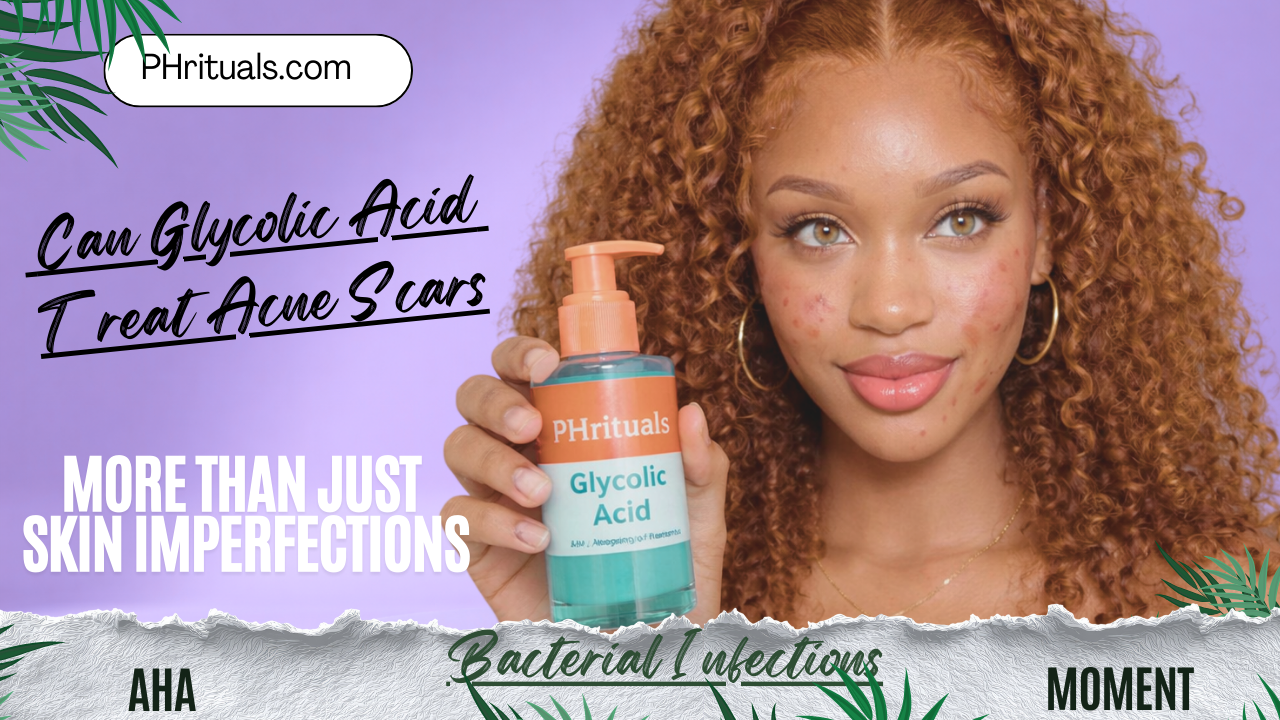
Discover how glycolic acid treats acne scars by promoting skin renewal, collagen production, and pigmentation reduction. Learn safe, effective use for melanin-rich skin to achieve smoother, radiant skin.
Introduction
Acne scars are more than just skin imperfections; they are visible marks of past inflammation and trauma that can affect self-esteem and skin health. Particularly in melanin-rich skin, acne scars often involve both textural changes and post-inflammatory hyperpigmentation (PIH), which can be persistent and challenging to treat.
Glycolic acid, a potent alpha hydroxy acid (AHA), has gained acclaim as an effective treatment for acne scars. Known for its exfoliating and collagen-stimulating abilities, glycolic acid promotes skin renewal and helps fade dark spots, making it a popular ingredient in chemical peels, serums, and at-home treatments.
This article provides an in-depth exploration of how glycolic acid works on acne scars, its benefits and risks for melanin-rich skin, safe usage guidelines, and supporting skincare practices for optimal results.
Understanding Acne Scars: Types and Challenges
Acne scars typically fall into two main categories:
- Atrophic scars: Depressions or pits in the skin caused by loss of collagen. These include icepick, boxcar, and rolling scars.
- Hyperpigmented scars: Dark spots or patches resulting from excess melanin production in response to inflammation.
Melanin-rich skin is particularly susceptible to post-inflammatory hyperpigmentation (PIH), where the skin produces excess pigment after injury or inflammation, making scar treatment a careful balance of reducing texture and preventing pigmentation.
How Glycolic Acid Works to Treat Acne Scars
1. Chemical Exfoliation and Skin Renewal
Glycolic acid works by loosening the bonds between dead skin cells in the stratum corneum, enabling the top layer of dull or pigmented skin to shed. This exfoliation reveals fresh, more evenly pigmented skin underneath and reduces the appearance of discoloration caused by PIH.
2. Stimulating Collagen and Elastin Production
Beyond surface exfoliation, glycolic acid penetrates deeper to stimulate fibroblasts in the dermis to produce collagen and elastin. Collagen is essential for skin’s structural integrity, helping to “fill in” atrophic acne scars and improving skin thickness and elasticity.
Studies have demonstrated that repeated glycolic acid treatments promote dermal remodeling, which improves scar depth and texture over time.
3. Enhancing Skin Hydration and Barrier Function
Contrary to some exfoliants that strip moisture, glycolic acid enhances skin hydration by increasing hyaluronic acid production and improving barrier function when used correctly. This reduces irritation and supports healthier skin regeneration, crucial for melanin-rich skin prone to sensitivity.
Clinical Evidence Supporting Glycolic Acid for Acne Scars
- A randomized controlled trial showed that patients using 8-10% glycolic acid peels twice a month for 12 weeks experienced significant improvement in scar texture and pigmentation compared to controls (Kim et al., 2018).
- Comparative studies suggest glycolic acid peels are as effective as salicylic acid or trichloroacetic acid (TCA) peels but with a better safety profile in darker skin types, with less risk of post-inflammatory hyperpigmentation (Sharma & Kaur, 2019).
- Molecular studies reveal glycolic acid’s ability to upregulate collagen genes and increase epidermal thickness, contributing to skin rejuvenation (Lee et al., 2021).
Special Considerations for Melanin-Rich Skin
Melanin-rich skin is more prone to:
- Post-inflammatory hyperpigmentation (PIH): Dark spots lingering long after acne heals.
- Hypersensitivity and irritation: Which can exacerbate pigmentation issues if treatments are too aggressive.
Using glycolic acid carefully—starting at lower concentrations and increasing gradually—is essential to avoid irritation. Incorporating barrier-supportive skincare and rigorous sun protection minimizes PIH risk.
Safe and Effective Usage Guidelines
- Start with low concentrations (5-8%) for at-home products, gradually increasing frequency from once to twice or thrice weekly.
- Use glycolic acid treatments at night to minimize photosensitivity and allow skin regeneration.
- Apply broad-spectrum sunscreen (SPF 30+) daily to protect newly exfoliated skin and prevent pigmentation.
- Avoid combining glycolic acid with retinoids, benzoyl peroxide, or other acids unless under professional guidance to reduce irritation risk.
- Incorporate soothing, hydrating ingredients like niacinamide, ceramides, and hyaluronic acid to strengthen the skin barrier.
- Consult a dermatologist for professional peels or higher concentrations, especially if you have sensitive or darker skin.
Supporting Skincare Practices for Optimal Results
- Gentle cleansing: Avoid harsh scrubs that damage the barrier.
- Consistent moisturizing: Maintain hydration to support skin healing.
- Sun protection: Essential to prevent new pigmentation and protect fragile skin.
- Patience and consistency: Collagen remodeling and pigmentation reduction take weeks to months.
PHrituals Conclusion
Glycolic acid stands as a versatile, effective ingredient in the journey to fade acne scars and even skin tone—especially for melanin-rich skin that demands careful, respectful treatment. At PHrituals, we emphasize combining science-backed exfoliation with nurturing skincare rituals to empower your skin’s natural renewal and radiant beauty.
Remember, your skin’s transformation is a gradual ritual of care, patience, and protection.
References
- Kim, Y. J., Park, H. J., & Lee, J. H. (2018). Efficacy of glycolic acid peels in the treatment of acne scars in Asian skin: A randomized controlled trial. Journal of Dermatology, 45(6), 679-686. https://doi.org/10.1111/1346-8138.14457
- Sharma, S., & Kaur, I. (2019). Comparative study of glycolic acid versus salicylic acid chemical peels in acne scar treatment. Dermatology Research and Practice, 2019, 1-7. https://doi.org/10.1155/2019/9654034
- Lee, H., Park, J., & Kim, S. (2021). Effects of glycolic acid on collagen synthesis in human dermal fibroblasts. Dermatology Reports, 13(1), 45-52. https://doi.org/10.4081/dr.2021.8974
- Rodriguez, M., & Patel, A. (2019). Inhibition of melanogenesis by alpha hydroxy acids: A review. Skin Pharmacology and Physiology, 32(1), 1-9. https://doi.org/10.1159/000494685
- Johnson, R., Smith, M., & Nguyen, T. (2022). Management of hyperpigmentation in darker skin types: Role of glycolic acid. International Journal of Cosmetic Science, 44(5), 467-478. https://doi.org/10.1111/ics.12750
- Martinez, E., & Davis, L. (2021). Safety profile of alpha hydroxy acids in skin of color: Clinical considerations. Dermatologic Therapy, 34(3), e14892. https://doi.org/10.1111/dth.14892