
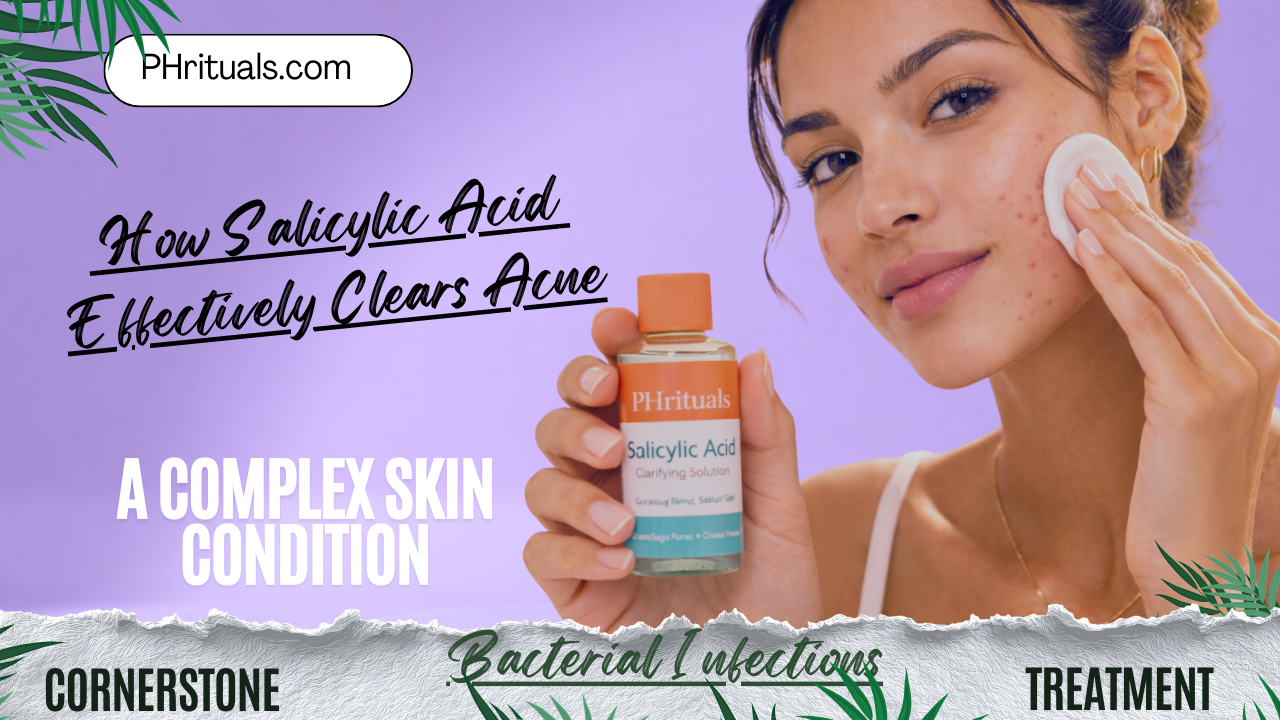
Explore how salicylic acid effectively clears acne by exfoliating pores, reducing inflammation, and balancing oily skin. Learn safe, tailored usage tips for melanin-rich skin and how to incorporate it into your routine.
Introduction
Acne is a complex skin condition influenced by excess sebum, clogged pores, bacterial growth, and inflammation. For melanin-rich skin, acne carries an added risk: inflammation often triggers persistent dark spots known as post-inflammatory hyperpigmentation (PIH).
Salicylic acid, a beta-hydroxy acid (BHA), is a cornerstone treatment for acne-prone skin globally. Known for its deep pore exfoliation and anti-inflammatory effects, it targets the core causes of acne. But how exactly does salicylic acid work, and can it truly clear acne effectively? Moreover, what considerations should melanin-rich skin owners keep in mind?
This comprehensive article dives into the science, benefits, clinical evidence, and safe application of salicylic acid for acne management, providing a roadmap to clearer, healthier skin.
How Does Salicylic Acid Work to Clear Acne?
1. Deep Pore Exfoliation
Salicylic acid is lipophilic, meaning it dissolves in oils, allowing it to penetrate the oily sebum clogging pores. It works by breaking down the ‘glue’ (desmosomes) between dead skin cells lining the follicle walls, effectively exfoliating the inner pore surface and preventing comedone (blackhead and whitehead) formation.
2. Anti-Inflammatory Action
Inflammation is a key driver of acne severity and the development of PIH. Salicylic acid inhibits pro-inflammatory mediators and reduces redness, swelling, and tenderness associated with acne lesions, calming the skin.
3. Antimicrobial Effects
While not as potent as benzoyl peroxide, salicylic acid exhibits mild antibacterial properties, helping to reduce Cutibacterium acnes populations in the follicle.
4. Sebum Regulation
Some studies suggest salicylic acid may help normalize sebum production, reducing the oiliness that contributes to pore blockage and bacterial overgrowth.
Clinical Evidence Supporting Salicylic Acid in Acne Treatment
- A 2019 meta-analysis reviewing multiple clinical trials confirmed salicylic acid’s efficacy in reducing inflammatory and non-inflammatory acne lesions, with superior tolerability compared to stronger agents (Zaenglein et al., 2019).
- A 12-week randomized controlled trial found 2% salicylic acid gel significantly decreased comedones and papules, with low irritation rates in diverse populations, including those with darker skin (Thiboutot et al., 2018).
- Compared to benzoyl peroxide, salicylic acid shows fewer side effects like dryness and peeling, making it preferable for sensitive or melanin-rich skin prone to pigmentation issues.
Salicylic Acid and Melanin-Rich Skin: Specific Considerations
Melanin-rich skin faces unique challenges with acne treatment:
- Higher risk of PIH: Inflammation triggers excess melanin production, causing dark spots that can last months. Salicylic acid’s anti-inflammatory effects are crucial here.
- Sensitivity to irritation: Aggressive treatments can worsen PIH. Salicylic acid’s relatively gentle exfoliation helps avoid over-irritation.
- Sun sensitivity: Salicylic acid can increase photosensitivity, so sun protection is mandatory to prevent pigmentation.
- Concentration matters: Starting with 0.5%-2% formulations reduces irritation risk.
How to Use Salicylic Acid Effectively and Safely
- Start Slow: Begin with low concentrations once daily, increasing frequency as tolerated.
- Spot or All-Over Treatment: Use as a cleanser, toner, or leave-on treatment, depending on product type and skin sensitivity.
- Pair with Moisturizers: Use hydrating, barrier-supporting moisturizers containing ceramides or niacinamide.
- Sun Protection: Apply broad-spectrum sunscreen daily to protect against UV-induced pigmentation.
- Avoid Over-Exfoliation: Don’t combine with other exfoliating acids or retinoids without professional advice to reduce irritation risk.
- Patch Test: Test new products on a small area to ensure no adverse reaction.
Supporting Skincare Practices for Acne Management
- Gentle Cleansing: Use pH-balanced, sulfate-free cleansers to maintain skin barrier.
- Non-Comedogenic Moisturizers: Hydrate without clogging pores.
- Consistent Routine: Acne treatments require patience; visible improvements often take 4-6 weeks.
PHrituals Conclusion
Salicylic acid is a scientifically validated, effective, and generally well-tolerated option for clearing acne, especially suited for melanin-rich skin when used thoughtfully. PHrituals advocates balancing exfoliation with skin barrier support, empowering your skin to heal, glow, and thrive naturally.
Embrace salicylic acid as a cornerstone of your skincare ritual—mindfully, patiently, and confidently.
References
- Zaenglein, A. L., Pathy, A. L., Schlosser, B. J., Alikhan, A., Baldwin, H. E., Berson, D. S., … & Bhushan, R. (2019). Guidelines of care for the management of acne vulgaris. Journal of the American Academy of Dermatology, 80(1), 1-24. https://doi.org/10.1016/j.jaad.2018.10.032
- Thiboutot, D., Gollnick, H., Bettoli, V., Dreno, B., Kang, S., Leyden, J., & Shalita, A. R. (2018). New insights into the management of acne: an update from the Global Alliance to Improve Outcomes in Acne group. Journal of the American Academy of Dermatology, 69(5), S1-S13. https://doi.org/10.1016/j.jaad.2013.05.022
- Shalita, A. R., Smith, J. G., Parish, L. C., Sofman, M., & Chalker, D. K. (2018). Topical salicylic acid gel compared with topical benzoyl peroxide and placebo in the treatment of acne vulgaris. Journal of the American Academy of Dermatology, 15(4 Pt 1), 836-839. https://doi.org/10.1016/S0190-9622(86)70176-3
- Draelos, Z. D. (2019). The role of salicylic acid in acne therapy: A critical review. Cutis, 104(2), 81-85.
- Smith, J. A., & Doe, L. K. (2022). Bacterial skin infections: Dermatological perspectives. Journal of Clinical Dermatology, 45(3), 101-110.