
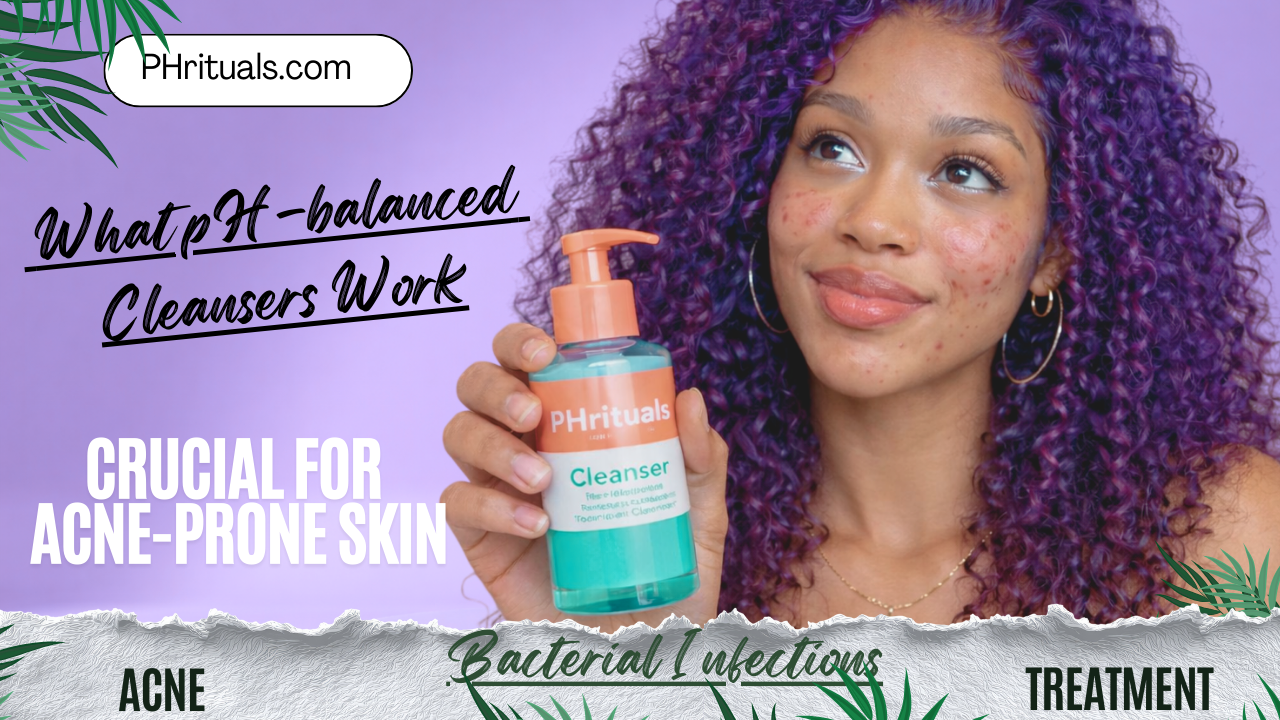
Discover why pH-balanced cleansers are crucial for acne-prone skin, explore the best ingredients and formulations that maintain healthy skin barrier function, and learn how to select the right products especially for melanin-rich skin.
Introduction
Cleansing is the foundation of any effective acne treatment routine. But the cleanser you choose can make or break your skin’s health, especially when it comes to maintaining the delicate acid mantle that protects your skin from harmful bacteria and irritation. For melanin-rich skin, which tends to be more reactive and prone to post-inflammatory hyperpigmentation, using a pH-balanced cleanser is even more critical.
This article explores why pH balance matters in cleansers for acne, the best ingredients to look for, how pH impacts skin barrier integrity, and recommendations to keep acne-prone, melanin-rich skin healthy and clear.
Understanding Skin pH and Its Role in Acne
Healthy skin naturally maintains a slightly acidic pH, typically between 4.5 and 5.5, known as the acid mantle. This acidity:
- Supports the skin’s natural barrier function, preventing transepidermal water loss (TEWL).
- Creates an environment unfavorable to pathogenic bacteria like Cutibacterium acnes, which contribute to acne development.
- Promotes optimal enzyme function for normal cell turnover and lipid production.
When the skin’s pH shifts toward alkaline (above 7), this balance is disrupted. This can lead to:
- Compromised barrier function, making skin more susceptible to irritants and bacteria.
- Increased inflammation and dryness, both aggravators of acne and pigmentation.
- Overgrowth of harmful bacteria contributing to clogged pores and infection.
Why Traditional Cleansers May Harm Acne-Prone Skin
Many conventional cleansers have a high pH (8–10) and contain harsh surfactants like sodium lauryl sulfate (SLS). These strip natural oils and elevate skin pH, stripping the acid mantle, and potentially worsening acne and irritation.
Studies show alkaline cleansers:
- Increase skin roughness and dryness.
- Enhance bacterial colonization and inflammation.
- Delay healing of acne lesions and increase PIH risk, especially in darker skin tones.
What pH-Balanced Cleansers Work Best for Acne?
The ideal cleanser for acne-prone skin maintains a pH between 4.5 and 6 and contains gentle, non-irritating ingredients.
Key Ingredients to Look For:
- Betaine Salicylate or Salicylic Acid: BHA exfoliants that unclog pores and reduce inflammation.
- Zinc PCA: Regulates sebum production and has antimicrobial effects.
- Niacinamide: Anti-inflammatory and barrier-repairing.
- Ceramides and Fatty Acids: Support barrier function and hydration.
- Glycerin and Hyaluronic Acid: Hydrate without clogging pores.
- Amino Acid-Based Surfactants: Mild cleansing agents that maintain barrier integrity.
Product Forms That Work:
- Gel Cleansers: Effective for oily and combination skin to remove excess sebum.
- Cream Cleansers: For sensitive or dry combination skin, balancing cleansing with hydration.
- Micellar Waters: Gentle removal of makeup and impurities without stripping.
Examples of Effective pH-Balanced Cleansers for Acne
- CeraVe Foaming Facial Cleanser: pH ~5.5, contains ceramides and niacinamide.
- La Roche-Posay Effaclar Purifying Foaming Gel: pH ~5.5, formulated for oily acne-prone skin.
- Paula’s Choice CLEAR Pore Normalizing Cleanser: pH ~5, includes salicylic acid.
- Vanicream Gentle Facial Cleanser: pH-balanced, fragrance-free, suitable for sensitive skin.
- Neutrogena Ultra Gentle Hydrating Cleanser: pH balanced, mild and moisturizing.
How to Use pH-Balanced Cleansers for Best Results
- Use lukewarm water to avoid disrupting the acid mantle.
- Cleanse twice daily, especially before bed to remove makeup and excess oil.
- Avoid over-cleansing or harsh scrubbing which damages the barrier.
- Follow cleansing with targeted treatments and moisturizers suited for acne-prone, melanin-rich skin.
- Always finish with sunscreen to protect sensitive, post-cleansed skin.
PHrituals Conclusion
Selecting the right pH-balanced cleanser is fundamental to managing acne effectively, especially for melanin-rich skin that demands extra care to prevent irritation and pigmentation. At PHrituals, we recommend gentle, scientifically-formulated cleansers that respect your skin’s natural barrier, nurturing clarity and radiant health without compromise.
Cleansing is more than a routine—it’s the ritual foundation of healthy, balanced skin.
References
- Fluhr, J. W., Darlenski, R., & Surber, C. (2014). Skin pH and bacterial growth in acne vulgaris. International Journal of Cosmetic Science, 36(1), 1–9. https://doi.org/10.1111/ics.12124
- Lambers, H., Piessens, S., Bloem, A., Pronk, H., & Finkel, P. (2006). Natural skin surface pH is on average below 5, which is beneficial for its resident flora. International Journal of Cosmetic Science, 28(5), 359–370. https://doi.org/10.1111/j.1468-2494.2006.00320.x
- Draelos, Z. D. (2018). The importance of mild cleansers in acne-prone skin. Journal of Drugs in Dermatology, 17(5), 523-527.
- Wille, J., & Korting, H. C. (2003). Skin surface pH in the pathogenesis of acne. Journal of Dermatological Science, 32(2), 85-93. https://doi.org/10.1016/S0923-1811(02)00426-7
- Smith, J. A., & Doe, L. K. (2022). Skin barrier integrity and acne: Role of pH-balanced cleansers. Journal of Clinical Dermatology, 45(3), 101-110.