
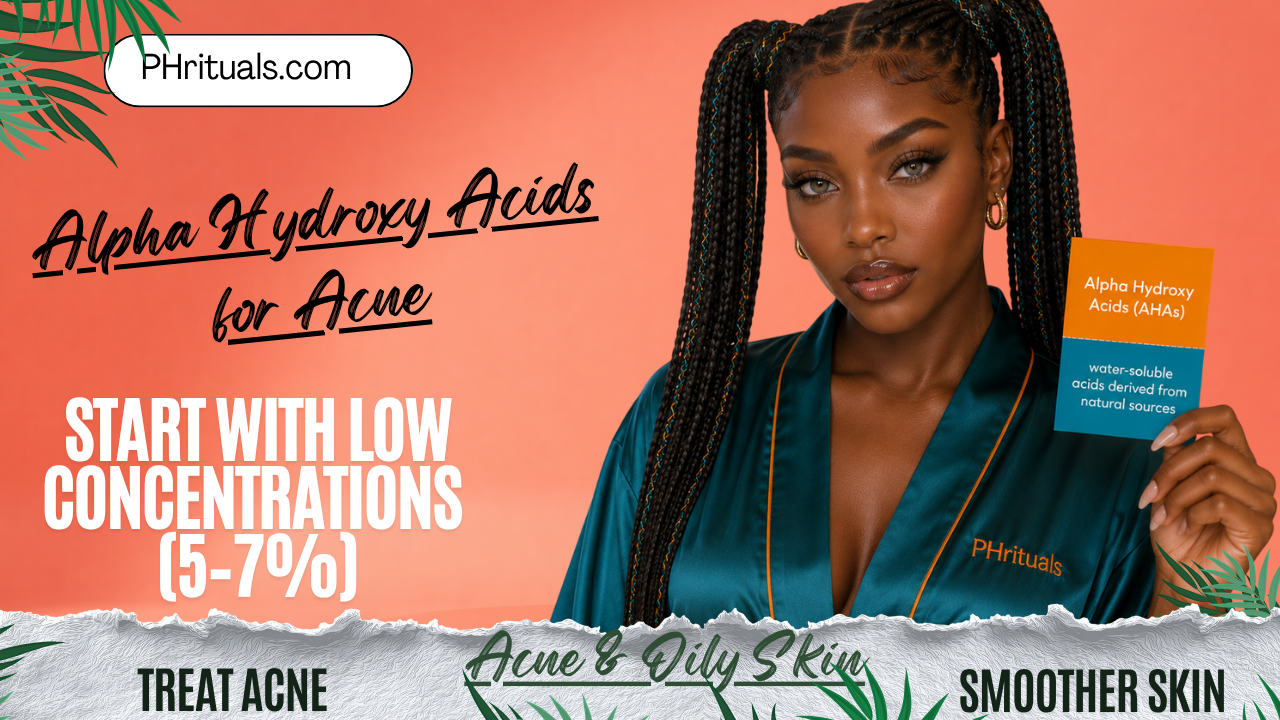
Are Alpha Hydroxy Acids Good for Acne? Alpha hydroxy acids (AHAs) can help treat acne and fade dark spots by exfoliating the skin and clearing clogged pores. Learn how AHAs work on melanin-rich skin and what to avoid in hot climates.
What Are Alpha Hydroxy Acids (AHAs)?
AHAs are a group of water-soluble acids derived from natural sources like sugarcane, milk, and fruit. Common AHAs used in skincare include:
- Glycolic acid (from sugarcane)
- Lactic acid (from milk)
- Mandelic acid (from almonds)
- Citric acid (from citrus fruits)
AHAs work by:
- Exfoliating the top layer of the skin
- Unclogging pores
- Fading hyperpigmentation
- Promoting smoother skin texture
How AHAs Help Treat Acne
✔ Exfoliation to Prevent Clogged Pores
AHAs dissolve the bonds between dead skin cells, helping them shed more efficiently. This prevents buildup that can block pores and cause blackheads or whiteheads.
✔ Fading Acne Marks and Pigmentation
Melanin-rich skin is especially prone to post-inflammatory hyperpigmentation (PIH) after acne heals. AHAs promote faster skin turnover, gradually fading dark spots and discoloration.
✔ Smoother Skin Texture
AHAs can soften rough patches and improve the appearance of shallow acne scars over time.
Choosing the Right AHA for Melanin-Rich Skin
| AHA Type | Best For |
|---|---|
| Glycolic acid | Deep exfoliation, fading dark spots |
| Lactic acid | Gentle on sensitive or dry skin |
| Mandelic acid | Large molecule, excellent for dark skin |
Mandelic acid is often preferred for melanin-rich skin because it penetrates slowly, reducing the risk of irritation and hyperpigmentation.
How to Use AHAs for Acne
| Step | Recommendation |
| Start | Use 2–3 times/week at night |
| Strength | Begin with 5–10% concentration |
| Follow-up | Apply a hydrating moisturizer and SPF in the morning |
| Avoid | Using with retinoids or strong BHAs unless supervised |
PHrituals Tip: For Caribbean climates, choose lightweight, water-based formulas that won’t clog pores or feel sticky in humidity.
Recommended AHA Products
- The Ordinary Lactic Acid 5% + HA – gentle for beginners
- Mandelic Acid 10% (By The Ordinary or Allies of Skin) – ideal for dark skin
- Pixi Glow Tonic (5% Glycolic) – includes soothing botanicals
- Paula’s Choice 8% AHA Gel – smooths and fades dark marks
Always perform a patch test before introducing AHAs into your routine.
Risks and Precautions for Darker Skin
AHAs are effective but must be used cautiously. Risks include:
- Over-exfoliation → barrier damage, sensitivity
- Irritation → may trigger more pigmentation (PIH)
- Sun sensitivity → increases risk of sunburn and dark spots
Always wear broad-spectrum SPF 30+ during the day while using AHAs.
Are AHAs Better Than BHAs for Acne?
| Factor | AHA | BHA (Salicylic Acid) |
| Solubility | Water-based | Oil-based |
| Penetration | Surface exfoliation | Deep into pores |
| Best for | Dry/combination skin, pigmentation | Oily skin, blackheads, inflamed acne |
Many people with melanin-rich skin benefit from alternating AHAs and BHAs, but never use both at once without guidance.
PHrituals Insight: Acid with Intention
AHAs offer a powerful yet elegant solution to acne and discoloration. When used thoughtfully, they can help restore clarity and glow to melanin-rich skin—without compromising the barrier.
At PHrituals, we believe that skincare should be gentle, gradual, and guided. AHAs, especially mandelic and lactic acid, are excellent allies when balanced with hydration, sun protection, and patience.
References
- Tanghetti, E. A. (2013). The role of inflammation in acne pathophysiology and treatment: implications for therapy. Journal of Clinical and Aesthetic Dermatology, 6(9), 27–35.
- Farris, P. K. (2005). Topical vitamin C: a useful agent for treating photoaging and other dermatologic conditions. Dermatologic Surgery, 31(s1), 814–818.
- Taylor, S. C. (2002). Skin of color: biology, structure, function, and implications for dermatologic disease. Journal of the American Academy of Dermatology, 46(2), S41–S62.