
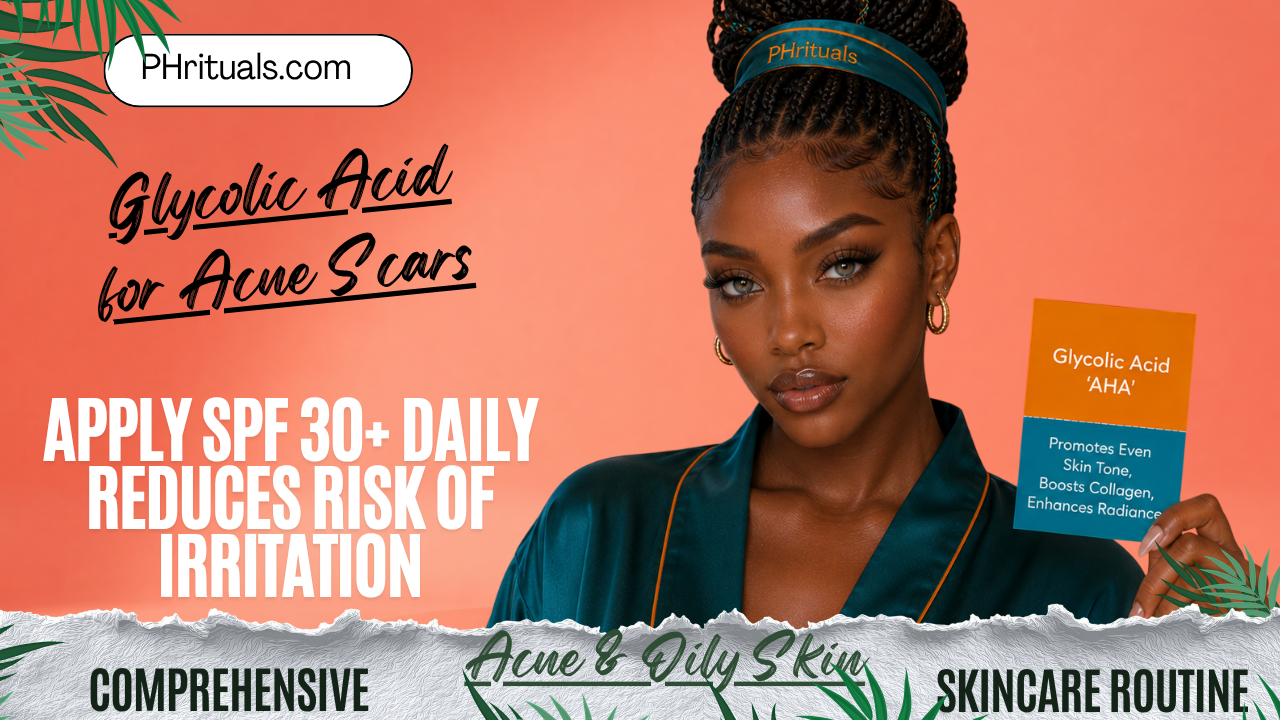
Can Glycolic Acid Treat Acne Scars? Glycolic acid can help fade acne scars and improve skin texture, especially in melanin-rich skin. Discover how it works, how to use it safely, and what to avoid in tropical climates.
Why Glycolic Acid Is Used for Acne Scars
Glycolic acid is a type of alpha hydroxy acid (AHA) derived from sugarcane. It’s known for:
- Exfoliating dead skin cells
- Stimulating collagen production
- Improving uneven pigmentation
Its small molecular size allows it to penetrate deeply into the skin, making it effective for fading post-inflammatory hyperpigmentation (PIH) and textural acne scars (Ditre et al., 1996).
How It Works on Melanin-Rich Skin
✔ Promotes Even Skin Tone
Glycolic acid gently fades dark spots over time by accelerating cell turnover. This helps remove pigmented skin layers while supporting the growth of new, evenly pigmented cells.
✔ Boosts Collagen
With regular use, it stimulates collagen synthesis in the dermis, gradually smoothing out depressed or pitted scars (Ryu et al., 2011).
✔ Enhances Radiance
Removes surface dullness, giving acne-prone skin a healthier, brighter appearance—especially important for dark skin that shows scars and pigmentation more easily.
Best Practices for Safe Use
| Tip | Why It Matters |
|---|---|
| Start with low concentrations (5–7%) | Reduces risk of irritation or chemical burns |
| Use at night | Glycolic acid increases photosensitivity |
| Follow with a barrier-repairing moisturizer | Prevents dryness and reinforces skin resilience |
| Apply SPF 30+ daily | Crucial to prevent further pigmentation |
| Patch test first | Especially important for melanin-rich skin prone to PIH |
PHrituals Tip: Use glycolic acid just 2–3 times per week initially to allow skin adaptation, especially in hot, sunny Caribbean climates.
Recommended Products with Glycolic Acid
OTC Products
- The Ordinary Glycolic Acid 7% Toning Solution – affordable, beginner-friendly
- Pixi Glow Tonic (5%) – gentle with aloe vera for hydration
- Alpha Skin Care Renewal Lotion (10%) – also contains vitamins C and E
Professional Peels (For deeper scars)
- 20–70% glycolic acid chemical peels administered by dermatologists or estheticians
Potential Risks for Darker Skin Tones
Melanin-rich skin requires careful use of glycolic acid to avoid:
- Irritation that may trigger more pigmentation
- Chemical burns with overly high concentrations
- Over-exfoliation leading to dryness, ashiness, and sensitivity
Always avoid:
- Daily use without breaks
- Using with other acids or retinoids unless under professional supervision
Can Glycolic Acid Permanently Remove Scars?
It depends on the type of scar:
| Type of Acne Scar | Glycolic Acid Impact |
| PIH (dark spots) | Very effective over time |
| Textural/icepick scars | Moderate improvement with regular use |
| Rolling scars | Best treated with professional intervention |
| Cystic scarring | May need combination therapy (retinoids, microneedling, peels) |
Glycolic acid is best used as part of a comprehensive skincare routine that includes hydration, sun protection, and anti-inflammatory agents.
PHrituals Insight: Exfoliate with Intention
For melanin-rich, acne-prone skin in tropical environments, glycolic acid can be a powerful ally or an overzealous enemy. Used wisely, it brightens, evens, and refines. Used recklessly, it irritates and darkens.
At PHrituals, we promote mindful skincare—where actives are balanced by botanicals, and results are achieved through ritual, not rush. Glycolic acid is a tool, not a fix. Use it to renew your skin, not strip its story.
References
- Ditre, C. M., Griffin, T. D., Murphy, G. F., Sueki, H., Telegan, B., Johnson, W. C., & Yu, R. J. (1996). Effects of alpha hydroxy acids on photoaged skin: a pilot clinical, histologic, and ultrastructural study. Archives of Dermatology, 132(6), 631–640.
- Ryu, H. S., Joo, Y. H., Kim, S. O., Park, K. C., & Youn, S. W. (2011). Influence of age and regional differences on skin elasticity as measured by the Cutometer. Skin Research and Technology, 14(3), 354–358.
- Taylor, S. C. (2002). Skin of color: biology, structure, function, and implications for dermatologic disease. Journal of the American Academy of Dermatology, 46(2), S41–S62.