
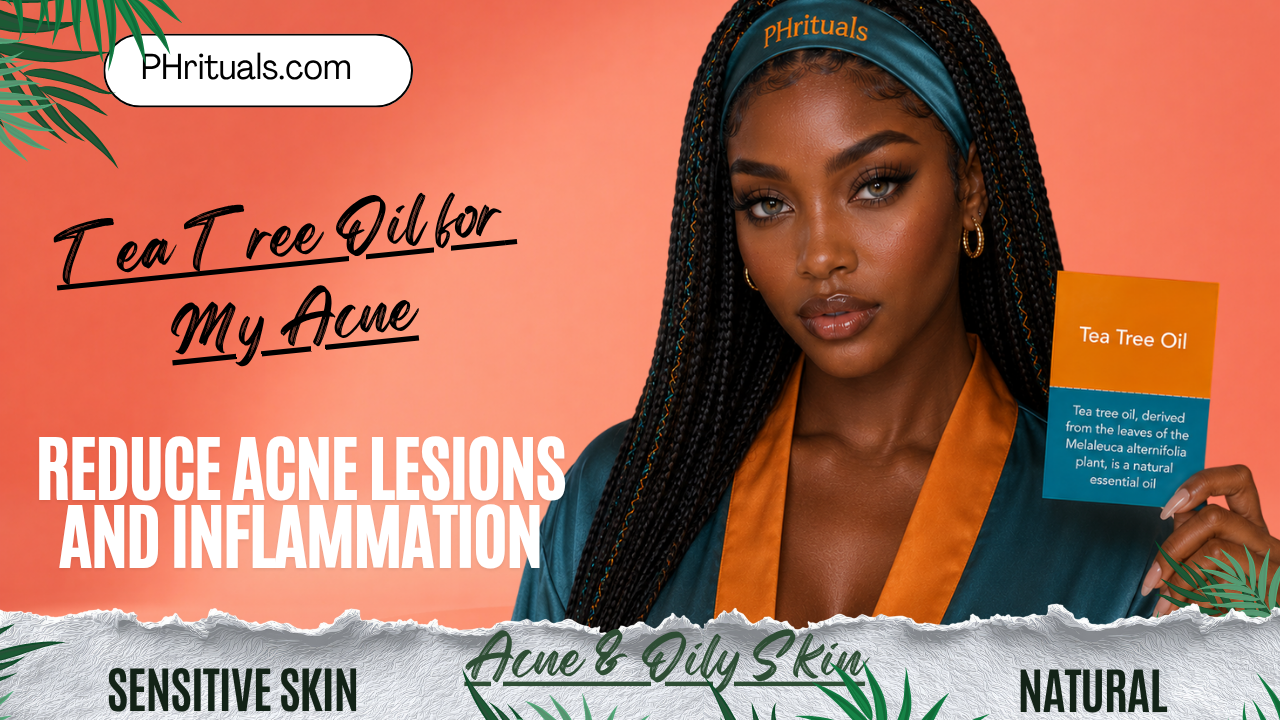
Should I Use Tea Tree Oil for My Acne? Tea tree oil has natural antibacterial and anti-inflammatory properties that can help reduce acne. Learn how to use it safely on melanin-rich skin and in Caribbean climates.
What Makes Tea Tree Oil a Popular Acne Remedy?
Tea tree oil, derived from the leaves of the Melaleuca alternifolia plant, is a natural essential oil recognized for its potent:
- Antibacterial effects (especially against C. acnes)
- Anti-inflammatory properties
- Antifungal activity (helpful for fungal acne)
These qualities make it a favorite in natural skincare for managing acne. Its effectiveness is supported by several clinical studies demonstrating its ability to reduce acne lesions and inflammation (Bassett et al., 1990).
How It Works on Acne-Prone Skin
Tea tree oil penetrates the skin and works by:
- Killing acne-causing bacteria
- Calming inflamed pimples
- Helping reduce swelling and redness
Unlike benzoyl peroxide, which can be harsh on sensitive skin, tea tree oil offers a plant-based alternative with fewer side effects when used correctly.
Benefits for Melanin-Rich and Tropical Skin
✔ Gentler on Dark Skin
Melanin-rich skin is more susceptible to scarring and pigmentation. Tea tree oil’s mild nature makes it suitable for reducing inflammation without triggering post-inflammatory hyperpigmentation (PIH)—when diluted properly.
✔ Effective in Humid Climates
Tea tree oil’s antifungal benefits make it ideal for Caribbean climates, where sweat and heat can lead to clogged pores and fungal acne (Malassezia folliculitis).
✔ Natural Astringent
Helps reduce oiliness without excessively stripping the skin’s moisture barrier—important in hot environments where dehydration is common.
Best Practices for Use
| Do | Don’t |
|---|---|
| Dilute with a carrier oil (e.g., jojoba, almond oil) | Apply undiluted directly to skin |
| Use at night as a spot treatment | Use all over the face without testing |
| Patch test on the inner arm or jaw | Combine with harsh actives (e.g., AHAs, BHAs) initially |
| Look for 5% formulations in gels or creams | Use with essential oil blends if you have sensitive skin |
Recommended Dilution:
- 1–2 drops of tea tree oil per 1 tsp of carrier oil (2–5% dilution)
Product Forms to Consider
- Pre-formulated gels (e.g., Thursday Plantation Acne Gel – ~5% tea tree oil)
- Cleansers with tea tree oil (e.g., The Body Shop Tea Tree Skin Clearing Cleanser)
- DIY spot treatments (using diluted essential oil)
For Caribbean users, ensure that any DIY blends are stored away from heat and sunlight to preserve potency.
Cautions for Melanin-Rich Skin
Tea tree oil is natural but potent. Risks include:
- Irritation or dryness if used undiluted
- Allergic reactions in sensitive individuals
- Photosensitivity in some users—always follow with SPF when using in the daytime
PHrituals Tip: If using tea tree oil during the day, layer with a calming moisturizer and broad-spectrum sunscreen to protect melanin from UV-induced darkening.
When Not to Use Tea Tree Oil
Avoid tea tree oil if you:
- Have a known allergy to essential oils
- Are pregnant or breastfeeding (without medical guidance)
- Are using retinoids, benzoyl peroxide, or AHAs and BHAs without professional advice
PHrituals Insight: Herbal Wisdom with Science
Tea tree oil bridges the gap between traditional remedies and modern skincare. For melanin-rich skin in tropical climates, it provides a natural, accessible tool in the fight against acne.
Used correctly, it calms without compromising. But it must be handled with respect, knowledge, and balance—the hallmarks of any PHrituals routine.
References
- Bassett, I. B., Pannowitz, D. L., & Barnetson, R. S. (1990). A comparative study of tea-tree oil versus benzoyl peroxide in the treatment of acne. Medical Journal of Australia, 153(8), 455–458.
- Carson, C. F., Hammer, K. A., & Riley, T. V. (2006). Melaleuca alternifolia (Tea Tree) oil: a review of antimicrobial and other medicinal properties. Clinical Microbiology Reviews, 19(1), 50–62.
- Alexis, A. F., & Callender, V. D. (2009). Acne in ethnic skin: special considerations for therapy. Dermatologic Clinics, 27(1), 105–110.