
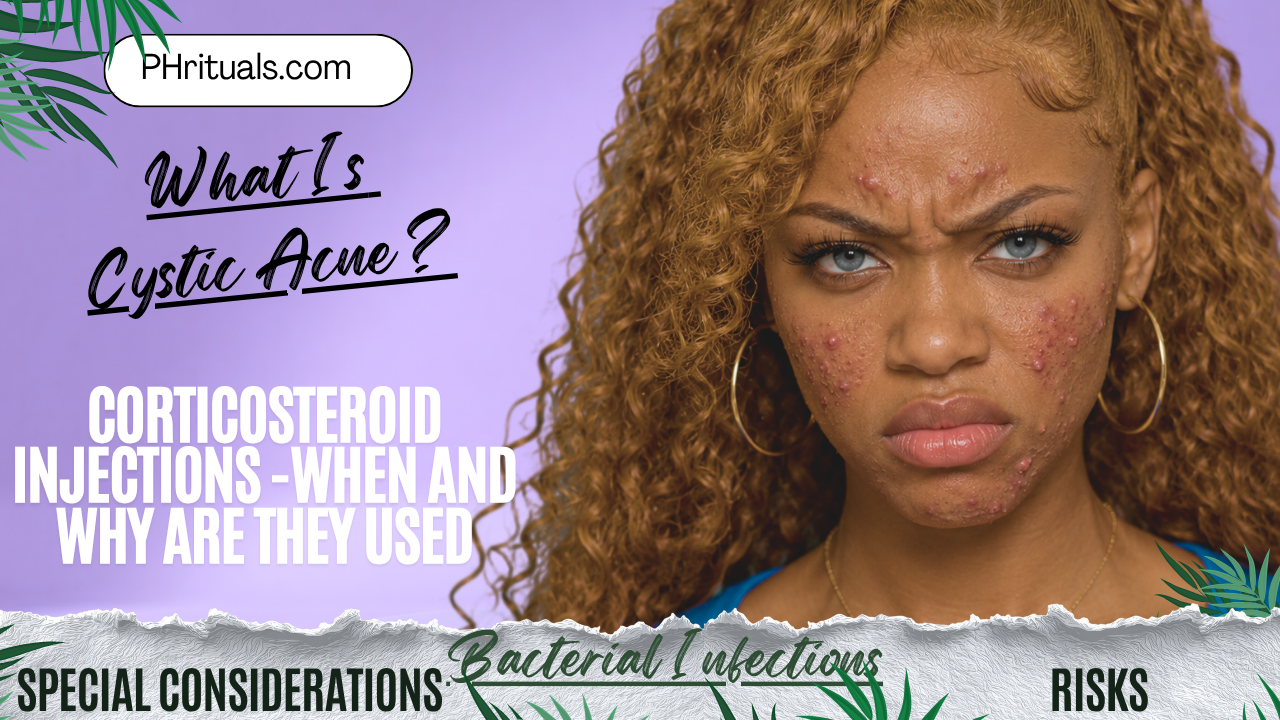
Are corticosteroid injections used for cystic acne? Learn how corticosteroid injections rapidly reduce cystic acne inflammation, who they’re for, their risks, and special considerations for melanin-rich and Caribbean skin types.
What Is Cystic Acne and Why Is It So Severe?
Cystic acne is the most painful and inflammatory form of acne vulgaris. It develops deep beneath the skin, forming swollen, tender nodules or cysts that may linger for weeks and often result in scarring or pigmentation—especially in melanin-rich skin.
Unlike surface-level whiteheads or blackheads, cystic lesions are immune-driven and filled with pus and inflammation. They rarely respond quickly to over-the-counter treatments and often need professional dermatologic care.
One of the fastest and most effective in-office treatments for cystic acne is the intralesional corticosteroid injection—a targeted solution for painful, stubborn lesions.
What Are Corticosteroid Injections?
Corticosteroid injections (often referred to as “cortisone shots”) involve the direct injection of a diluted triamcinolone acetonide (a synthetic steroid) into the cyst. This reduces:
- Inflammation by calming the body’s immune response
- Swelling and redness within 24–72 hours
- Pain and tenderness associated with cysts
- Risk of scarring if administered early enough
These injections are not a cure for acne but serve as emergency relief for large, painful lesions that risk becoming scars.
When and Why Are They Used?
Cortisone shots are typically recommended when:
- A cyst is extremely inflamed or painful
- There’s a big event coming up and rapid resolution is needed
- Scarring risk is high, especially in individuals prone to PIH or keloids
- A cyst hasn’t responded to oral or topical medications
For Caribbean and global clients with melanin-rich skin, early intervention with corticosteroids can reduce trauma and minimize dark marks that often follow deep inflammation.
What to Expect During the Procedure
The procedure is quick and usually performed in-office by a dermatologist or trained medical provider:
- Cleanse and prep: The cyst area is disinfected.
- Injection: A fine needle is used to inject the diluted corticosteroid directly into the lesion.
- Aftercare: No downtime is required, but the area should be left untouched for 24 hours.
Improvement is often seen within 24 to 48 hours, with full resolution in 3–7 days.
Risks, Side Effects, and Limitations
Though effective, corticosteroid injections do carry some risks—especially with repeated use or incorrect technique:
- Skin thinning (atrophy): The treated area may appear sunken temporarily.
- Hypopigmentation: Especially noticeable in darker skin tones, though often reversible.
- Capillary dilation (telangiectasia): Small visible blood vessels in the area.
- Rebound lesions: If the cause of cystic acne isn’t addressed systemically, new lesions may form.
In Caribbean contexts, improper technique or non-sterile conditions at underregulated clinics may increase risk. It’s essential to seek qualified professionals.
Accessibility in the Caribbean and Beyond
Corticosteroid injections are available in most dermatology clinics and medical spas across Caribbean territories such as Jamaica, Trinidad, Barbados, and The Bahamas—especially in urban centers. However, access may be limited in rural regions, and public systems may not prioritize this treatment unless the acne is classified as severe.
The average cost per injection ranges from $25–$100 USD, depending on location and provider experience.
Special Considerations for Melanin-Rich Skin
Corticosteroid injections can be highly effective for deeper, inflamed lesions in melanin-rich skin, but with extra care:
- Use lower dilutions of triamcinolone to avoid hypopigmentation
- Limit use to no more than once per month per area
- Combine with post-care brightening agents like azelaic acid or niacinamide to reduce pigmentation issues
Pre- and post-treatment sun protection is non-negotiable to avoid further discoloration in treated areas.
Complementary Care: Preventing Future Flares
While cortisone shots treat existing lesions, they don’t prevent future breakouts. For sustainable improvement, integrate:
- Prescription oral treatments like spironolactone or isotretinoin if cystic acne is recurring
- Topical retinoids and benzoyl peroxide for prevention
- PHrituals skincare recommendations like:
- Gel cleansers with salicylic acid
- Oil-free moisturizers with green tea extract
- SPF 50+ mineral sunscreen to protect vulnerable skin
Final Thoughts: Targeted Relief with Precision
Corticosteroid injections are a valuable dermatologic tool for quickly treating severe cystic acne. While they don’t replace a full acne regimen, they offer rapid relief, prevent scarring, and restore confidence—especially when timed early and done professionally.
For melanin-rich individuals and Caribbean-based clients, the technique, dilution, and post-care are crucial to ensure effective results without unwanted pigmentation changes. When done right, these injections can be a strategic addition to holistic acne management.
References
Zaenglein, A. L., Pathy, A. L., Schlosser, B. J., et al. (2016). Guidelines of care for the management of acne vulgaris. Journal of the American Academy of Dermatology, 74(5), 945–973.e33. https://doi.org/10.1016/j.jaad.2015.12.037
Battle, E. F. (2020). Treating acne and PIH in patients with skin of color. Journal of Clinical and Aesthetic Dermatology, 13(2), 17–24.