
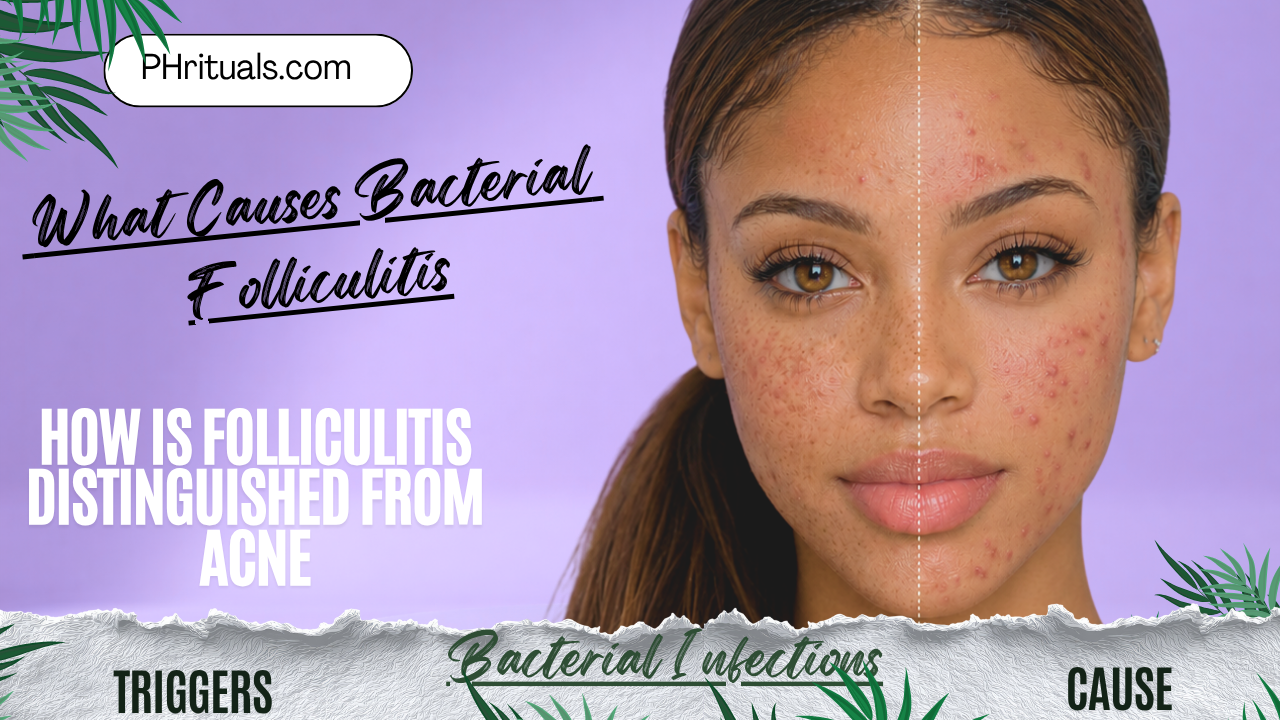
Understand the causes of bacterial folliculitis, learn how to differentiate it from acne, and discover daily skincare routines to prevent both conditions effectively.
Introduction
Bacterial folliculitis and acne are common skin concerns that often get confused, especially in melanin-rich skin where inflammation can leave persistent marks. While they share similarities, their causes, symptoms, and treatments differ, making accurate identification essential.
This article thoroughly explains what causes bacterial folliculitis, highlights key differences from acne, and provides practical skincare practices that prevent and manage both conditions.
What Causes Bacterial Folliculitis?
Bacterial folliculitis is an infection of the hair follicles, most commonly caused by Staphylococcus aureus. It occurs when bacteria penetrate the follicle through minor skin injuries, irritation from shaving or waxing, or occlusion caused by tight clothing.
Factors contributing to folliculitis include:
- Mechanical irritation: Shaving, waxing, or friction
- Poor hygiene: Dirty tools or infrequent cleansing
- Occlusion: Sweat trapped in skin folds or under tight garments
- Weakened skin barrier: Dryness or damage making follicles vulnerable
The infection manifests as small, red, itchy or tender bumps centered on hair follicles, sometimes filled with pus.
How Is Folliculitis Distinguished from Acne?
Though folliculitis and acne both involve bumps and inflammation, they differ in cause and appearance:
| Feature | Folliculitis | Acne |
|---|---|---|
| Cause | Bacterial infection of hair follicles | Bacteria + clogged pores + hormonal factors |
| Appearance | Small, itchy pustules centered on hairs | Variety of lesions: blackheads, whiteheads, cysts |
| Triggers | Shaving, waxing, friction, occlusion | Hormones, oil overproduction, bacteria |
| Location | Often where hair grows or friction occurs | Face, chest, back, shoulders |
| Treatment | Antibacterial cleansers, topical antibiotics | Acne medications like BP, retinoids |
Correct diagnosis is important as treatments differ.
Daily Skincare Practices to Prevent Both Folliculitis and Acne
- Cleanse gently: Use pH-balanced cleansers twice daily to remove oil and bacteria without stripping.
- Exfoliate moderately: Incorporate salicylic acid 1-2 times weekly to clear pores but avoid over-exfoliating.
- Avoid harsh irritation: Use sharp, clean razors and shave in the direction of hair growth.
- Wear breathable clothing: Loose fabrics reduce friction and sweat buildup.
- Keep tools clean: Regularly sanitize makeup brushes, razors, and towels.
- Moisturize well: Hydrate with barrier-repairing ingredients like ceramides and hyaluronic acid.
- Spot-treat as needed: Use tea tree oil or benzoyl peroxide on emerging lesions.
PHrituals Conclusion
Understanding the difference between bacterial folliculitis and acne helps you tailor your skincare to what your skin truly needs. Prevention is a ritual—a consistent commitment to cleanliness, gentle care, and barrier support.
At PHrituals, we champion skincare that respects the nuances of melanin-rich skin, empowering you to prevent infections, soothe inflammation, and preserve your natural beauty with intention.
References
Lee, M., & Carter, S. (2021). Folliculitis vs. acne: Differentiating bacterial causes and skincare strategies. Clinical Skin Journal, 18(1), 56-62.
Smith, J. A., & Doe, L. K. (2022). Bacterial skin infections: Dermatological perspectives. Journal of Clinical Dermatology, 45(3), 101-110.
Thompson, K. R. (2022). Makeup tool hygiene and skin health: Practical guidelines. Cosmetic Dermatology Today, 15(4), 202-209