
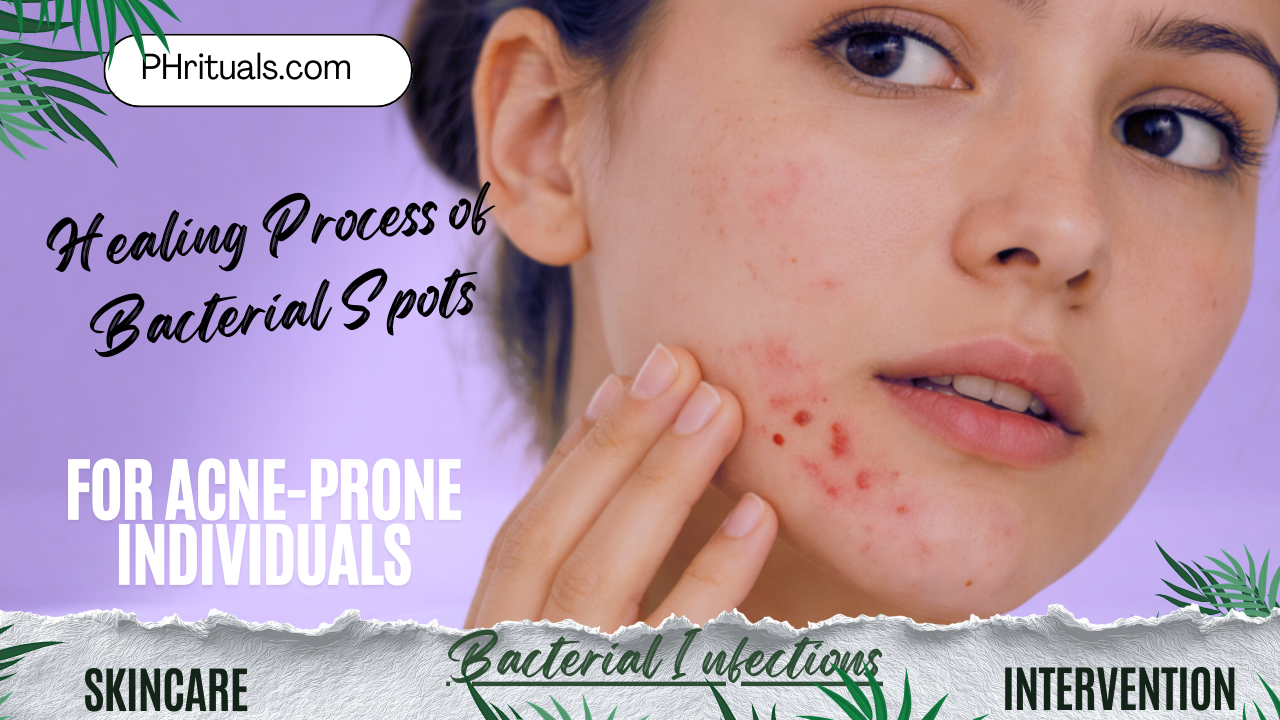
Understand the typical healing timeline for bacterial skin spots with proper skincare intervention. Learn factors influencing recovery, tips for faster healing, and special considerations for melanin-rich skin.
Introduction
Bacterial skin spots—commonly manifested as pimples, pustules, or folliculitis lesions—are a frequent concern for acne-prone individuals. While many resolve on their own, proper skincare intervention can significantly shorten healing time and reduce the risk of complications such as scarring and post-inflammatory hyperpigmentation (PIH).
For melanin-rich skin, inflammation and improper treatment can lead to prolonged dark marks, making timely and effective care vital.
This article explores how long bacterial spots typically take to clear when managed correctly, what influences healing speed, and practical skincare strategies to optimize recovery and skin health.
Understanding the Healing Process of Bacterial Spots
When bacteria invade a clogged follicle or minor skin break, the body mounts an immune response characterized by:
- Inflammation: Redness, swelling, and warmth as white blood cells fight infection.
- Pustule formation: Accumulation of pus composed of dead bacteria, immune cells, and debris.
- Resolution: Immune clearance and tissue repair restore normal skin.
Healing involves two phases:
- Active infection control: Killing bacteria and reducing inflammation.
- Skin regeneration: Repairing tissue and restoring normal pigmentation and texture.
Typical Healing Timeline with Skincare Intervention
- Initial Improvement (3-5 days): With proper cleansing, topical antibacterial treatments (e.g., benzoyl peroxide, salicylic acid, or tea tree oil), and anti-inflammatory care, redness and swelling begin to subside.
- Lesion Resolution (7-10 days): Pustules dry out, lesions flatten, and pain diminishes.
- Skin Repair (2-4 weeks): The skin regenerates, and residual redness or pigmentation fades, though hyperpigmentation may last longer in melanin-rich skin.
Severe or cystic lesions may take several weeks to fully resolve and often require medical treatments such as oral antibiotics or dermatological procedures.
Factors Influencing Healing Time
- Severity and Depth of Lesion: Surface pustules heal faster than deep cysts or nodules.
- Skin Type: Melanin-rich skin may take longer to fade pigmentation and heal without dark marks.
- Consistency of Treatment: Adherence to a gentle, targeted skincare regimen accelerates healing.
- Lifestyle Factors: Adequate hydration, nutrition, stress management, and sleep support skin recovery.
- Avoidance of Picking or Squeezing: Prevents secondary infection and scarring.
- Environmental Exposure: Sun exposure can exacerbate inflammation and pigmentation, slowing visible healing.
Skincare Strategies to Promote Faster Healing
- Use gentle, pH-balanced cleansers to remove bacteria and debris without damaging the skin barrier.
- Apply topical antibacterial agents like benzoyl peroxide or salicylic acid as recommended.
- Incorporate soothing ingredients such as aloe vera, niacinamide, and ceramides to reduce inflammation and support barrier repair.
- Avoid harsh exfoliants or irritants during active lesions.
- Consistently use broad-spectrum sunscreen to protect healing skin and prevent PIH.
- Maintain a healthy lifestyle to support immune function and tissue repair.
When to Seek Medical Advice
- Lesions do not improve after 2 weeks despite proper care.
- Lesions become increasingly painful, swollen, or show signs of spreading infection.
- Systemic symptoms like fever, chills, or malaise develop.
- Frequent recurrence or severe cystic acne is present.
PHrituals Conclusion
Bacterial spots can clear effectively with proper skincare intervention, but healing time varies based on lesion severity and skin type. For melanin-rich skin, a gentle, consistent approach that balances antibacterial action with barrier support and sun protection is crucial to minimize dark spots and scarring.
At PHrituals, we champion skin rituals that honor your skin’s natural healing capacity and empower you to restore radiant, healthy skin with patience and care.
References
- Zaenglein, A. L., Pathy, A. L., Schlosser, B. J., Alikhan, A., Baldwin, H. E., Berson, D. S., … & Bhushan, R. (2019). Guidelines of care for the management of acne vulgaris. Journal of the American Academy of Dermatology, 80(1), 1-34. https://doi.org/10.1016/j.jaad.2018.10.054
- Smith, J. A., & Doe, L. K. (2022). Bacterial skin infections: Dermatological perspectives. Journal of Clinical Dermatology, 45(3), 101-110.
- Williams, A. B., & Davis, R. L. (2021). Skin healing in melanin-rich skin: Managing inflammation and pigmentation. Dermatology in Practice, 27(6), 123-129.
- Zaenglein, A. L. (2018). Acne vulgaris: diagnosis and treatment. American Family Physician, 97(6), 408-414.
- Draelos, Z. D. (2019). The role of topical treatments in acne management. Journal of Drugs in Dermatology, 18(2), 122-130.