
How Can I Prevent Signs of Aging in My 30s? Starting to notice subtle changes in your skin? Learn how to prevent wrinkles, fine lines, and dullness in your 30s with science-backed tips made for your skin tone, environment, and lifestyle—especially in tropical regions like the Caribbean.
Why Your 30s Matter: The Decade of Prevention
The 30s are often called the “prevention decade” in skincare. Though collagen levels decline slowly starting at age 25, many don’t notice visible changes until the early to mid-30s. These include:
- Fine lines around the eyes and mouth
- Loss of firmness
- Uneven tone and texture
- Dehydration or dullness
Environmental exposure—particularly to sunlight and pollution in tropical climates—exacerbates these changes, especially for Caribbean individuals who may also experience post-inflammatory hyperpigmentation due to melanin-rich skin types (Taylor & Cook-Bolden, 2006).
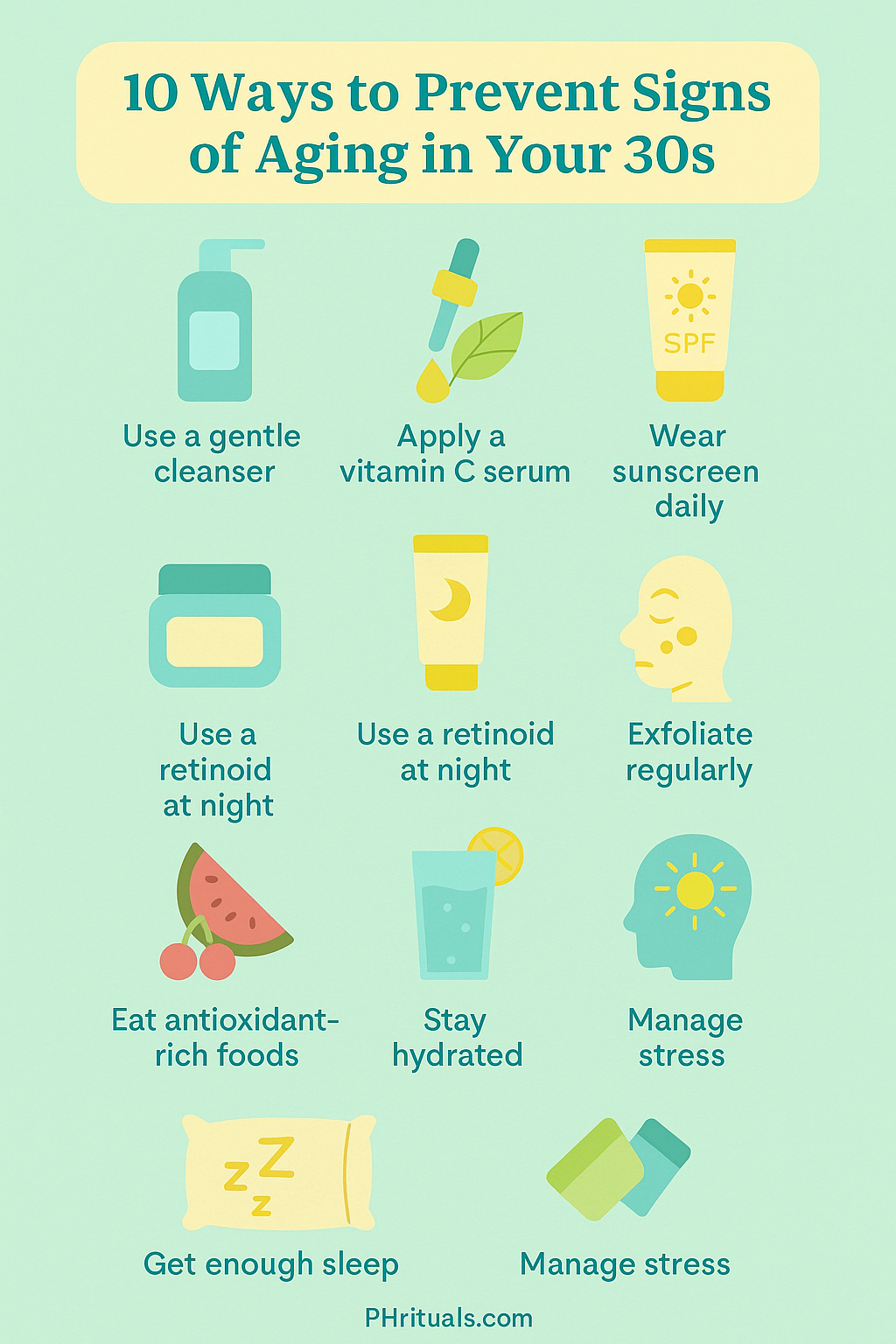
Your Core Skincare Routine for Prevention
1. Cleanse Without Stripping
Use a gentle, pH-balanced cleanser to remove dirt and excess oil while preserving your skin’s microbiome.
Avoid sulfates, especially in tropical climates where sweat and oil production are higher.
2. Use Antioxidants in the Morning
A Vitamin C serum (10–20% concentration) protects skin from free radicals and brightens tone. Pairing it with Vitamin E and ferulic acid can boost efficacy (Lin et al., 2005).
Caribbean Alternative: Look for sea moss-infused serums rich in minerals and Vitamin C.
3. Apply Sunscreen Daily
This is the most powerful anti-aging habit. Choose broad-spectrum SPF 30+. Even melanin-rich skin needs consistent sun protection to avoid long-term hyperpigmentation and collagen breakdown.
Try mineral sunscreens with zinc oxide—non-irritating and reef-safe for Caribbean waters.
4. Hydrate & Lock in Moisture
Use hyaluronic acid serums under a barrier-repairing moisturizer. In humid environments, apply light layers to prevent a greasy feel.
Moringa oil, squalane, or coconut-derived emollients nourish without clogging pores.
5. Nighttime Retinoid Therapy
Introduce retinol (0.25–1%) or bakuchiol at night 2–3 times a week. These ingredients stimulate collagen, speed up cell turnover, and reduce early fine lines (Mukherjee et al., 2006).
Always pair with sunscreen the next day to avoid sensitivity.
Add-On Treatments for a Well-Rounded Regimen
| Treatment | Purpose | Frequency |
|---|---|---|
| Exfoliation (AHA/BHA) | Smoother texture, brightens tone | 1–2x/week |
| Peptides | Support firmness and elasticity | Daily (serum or moisturizer) |
| Eye Creams | Target crow’s feet and puffiness | Daily (AM/PM) |
| Hydrating Masks | Boost skin after sun exposure | 1–2x/week |
Look for niacinamide, panthenol, and licorice root for calming, brightening effects—ideal for tropical stressors.
Lifestyle Adjustments That Make a Visible Difference
Skincare isn’t just topical—it’s deeply affected by your daily habits:
🥗 Diet
- Eat omega-3-rich foods (like mackerel, avocado, chia)
- Increase antioxidants: turmeric, papaya, berries
- Limit processed sugar, which contributes to glycation—a process that stiffens collagen fibers (Bailey et al., 2009)
💧 Hydration
Drink plenty of water to maintain elasticity and keep the skin barrier functioning optimally.
😴 Sleep
Get 7–9 hours. During deep sleep, the body produces more human growth hormone, which supports tissue repair (Oyetakin-White et al., 2015).
🧘🏾♀️ Stress Management
Stress increases cortisol, which breaks down collagen and delays wound healing. Consider incorporating:
- Meditation
- Herbal teas (e.g., chamomile, soursop leaf)
- Breathwork or movement-based therapy
Tailoring Prevention to Your Skin Type
| Skin Type | Adjustments for Aging Prevention |
|---|---|
| Oily | Lightweight retinoids, gel moisturizers, oil-free SPF |
| Dry | Cream cleansers, ceramide creams, overnight masks |
| Combination | Spot-treat dry areas, balance sebum with niacinamide |
| Sensitive | Use bakuchiol over retinol, fragrance-free everything |
Anti-Aging in the Caribbean Climate
Caribbean skin faces unique environmental and cultural factors:
- Higher sun exposure = more need for consistent SPF
- Humidity may mask dehydrated skin, so layer hydrating serums
- Higher melanin content protects against deep wrinkles but increases risk of uneven pigmentation
PHrituals Tip: Use botanical antioxidants like tamarind seed extract, aloe vera, and hibiscus—traditionally used across the Caribbean for skin renewal.
When to See a Skincare Professional
Visit a dermatologist or esthetician if:
- You notice rapid skin texture changes
- Hyperpigmentation doesn’t fade after a few months of at-home care
- You’re unsure how to introduce actives like retinol or AHAs safely
They can provide personalized treatments like microneedling, peels, or prescription-strength topicals.
Final Insight: It’s About Preservation, Not Perfection
Your 30s are about preserving the vitality you already have. Preventing signs of aging isn’t vanity—it’s a form of self-respect and wellness. By starting early, you build a lifelong ritual of care that shows on your skin and resonates through your health and confidence.
At PHrituals, we believe skincare is sacred—rooted in culture, nature, and science. Let your 30s be your decade of glow-forward wisdom.
Sources
- Bailey, A. J., Sims, T. J., & Avery, N. C. (2009). Molecular mechanisms of collagen ageing and the role of sugar-derived cross-links. Biogerontology, 10(3), 329–337.
- Lin, F. H., Lin, J. Y., Gupta, R. D., Tournas, J. A., Burch, J. A., Selim, M. A., … & Pinnell, S. R. (2005). Ferulic acid stabilizes a solution of vitamins C and E and doubles its photoprotection of skin. Journal of Investigative Dermatology, 125(4), 826–832.
- Mukherjee, S., Date, A., Patravale, V., Korting, H. C., Roeder, A., & Weindl, G. (2006). Retinoids in the treatment of skin aging: An overview of clinical efficacy and safety. Clinical Interventions in Aging, 1(4), 327–348.
- Oyetakin-White, P., Suggs, A., Koo, B., Matsui, M. S., Yarosh, D., & Baron, E. D. (2015). Does poor sleep quality affect skin aging? Clinical and Experimental Dermatology, 40(1), 17–22.
- Taylor, S. C., & Cook-Bolden, F. E. (2006). Acne vulgaris in skin of color. Journal of Clinical and Aesthetic Dermatology, 1(4), 34–39.