
How Do Hormones Affect Skin Health? This expert guide explains the impact of puberty, periods, pregnancy, and menopause on your skin—plus science-backed ways to restore balance in both tropical and global climates.
Hormones and Your Skin: The Hidden Influencers Beneath the Surface
While skincare routines often focus on ingredients and products, hormones are the silent drivers that determine how our skin behaves. Hormonal fluctuations influence oil production, collagen levels, pigmentation, sensitivity, and even wound healing (Slominski et al., 2012). Understanding the hormonal connection is essential—especially for individuals with melanin-rich skin or those living in tropical climates where heat and humidity further interact with hormonal triggers.
Let’s break it down by life stages and the hormonal changes that affect your skin health.
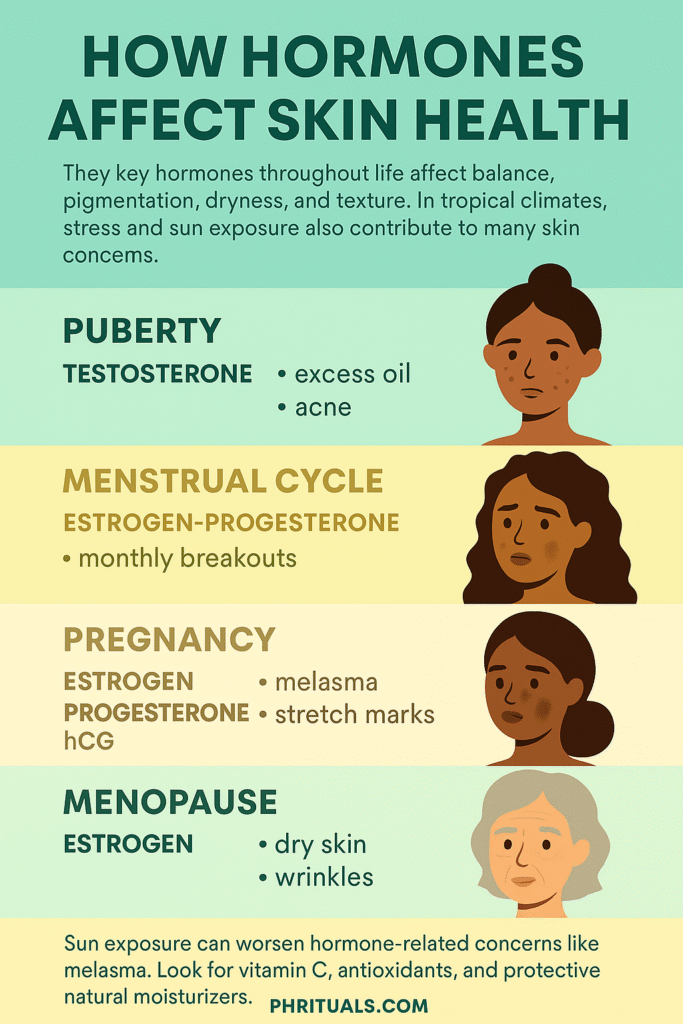
Puberty: Where It All Begins
During puberty, a surge in androgens (like testosterone) triggers increased activity in the sebaceous glands, leading to:
- Excess oil production
- Clogged pores
- Inflammatory acne, particularly on the face, back, and chest
This is true across ethnicities, but Black and Caribbean teens are more likely to develop post-inflammatory hyperpigmentation (PIH) after breakouts due to melanin’s response to inflammation.
Tip: Focus on gentle cleansers, non-comedogenic moisturizers, and spot treatments with niacinamide or salicylic acid to reduce oil without overdrying.
Menstrual Cycle: Monthly Fluctuations
The estrogen-progesterone cycle affects the skin’s oil balance and inflammation levels:
- Days 1–14 (follicular phase): Skin tends to be more stable.
- Days 15–28 (luteal phase): Rising progesterone can increase oil production, leading to breakouts.
Hormonal acne often appears around the chin, jawline, and lower cheeks. Many Caribbean and global users notice these flare-ups during heat waves or before menstruation when sweat mixes with excess sebum.
Best Ingredients: Tea tree oil (diluted), green tea extract, and lightweight gel moisturizers with soothing botanicals like aloe vera.
Pregnancy: The Glow… and the Surprises
Pregnancy brings elevated levels of estrogen, progesterone, and human chorionic gonadotropin (hCG)—hormones that can both help and harm skin health.
Common changes:
- Melasma (pregnancy mask): Increased melanin production triggered by hormonal surges and sun exposure
- Stretch marks: Due to rapid skin expansion and hormonal elasticity changes
- Breakouts or oil imbalance: Especially during the first trimester
Safe skincare choices: Use vitamin C, azelaic acid, and mineral SPF to manage discoloration and protect the skin barrier. Avoid retinoids and high-dose salicylic acid during pregnancy.
Caribbean Insight: Melasma is especially pronounced in women living in sun-rich regions without consistent sunscreen use. Daily SPF 30+ and hats are essential.
Perimenopause and Menopause: The Age of Change
Between ages 40–55, women experience declining estrogen levels, leading to:
- Dryness and thinning skin
- Increased fine lines and sagging
- Reduced collagen and elastin production
- Delayed wound healing
Men may also experience lower testosterone levels, which affect skin thickness and sebum production over time.
Recommended actives:
- Peptides and hyaluronic acid to restore volume
- Ceramides and squalane to repair the lipid barrier
- Retinol or bakuchiol for anti-aging benefits
- SPF and antioxidants to protect from UV and pollution-related aging
Stress Hormones: Cortisol and Skin Inflammation
Chronic stress elevates cortisol, which can disrupt skin’s barrier function, leading to:
- Increased sensitivity
- Breakouts or rosacea flare-ups
- Slower healing and dull tone
This is especially relevant in fast-paced urban life or heat-heavy climates that strain the skin. Caribbean users often report flare-ups during exam periods, pregnancy, or social stressors.
Mind–Skin Connection Tip: Adaptogens like ashwagandha, plus calming skincare routines using chamomile, calendula, and rosewater can support overall balance.
Male Hormonal Skin Changes
While male hormonal cycles aren’t cyclical like females, testosterone plays a central role in:
- Oil production (leading to acne) during adolescence and into early adulthood
- Beard follicle sensitivity, often contributing to ingrown hairs or irritation from shaving
- Collagen support, which may decline with age, affecting firmness
Best support: Salicylic acid for ingrown hair prevention, niacinamide for inflammation, and peptides for age management.
Hormonal Imbalance Signs to Watch For
Whether you’re dealing with irregular periods, PCOS, or menopause, signs of hormone-related skin issues may include:
- Persistent jawline or chin acne
- Sudden dry patches with no environmental triggers
- Melasma or pigment flare-ups without sunburn
- Increased oiliness with no routine changes
If these symptoms are ongoing, it’s wise to speak with a dermatologist or endocrinologist for deeper investigation.
Conclusion: Hormones Are Your Skin’s Messengers—Listen to Them
Hormones don’t just impact your mood or metabolism—they speak directly to your skin. From teenage oiliness to menopausal dryness, understanding these messengers can help you build a skincare routine that evolves with your life.
Whether you’re battling tropical humidity or navigating the hormonal shifts of aging, the key is balance—support your hormones with the right ingredients, gentle care, and awareness of how life stages interact with your skin.
References
Slominski, A. T., Zmijewski, M. A., & Paus, R. (2012). Melatonin and the skin: Old ideas and new facts. Trends in Endocrinology & Metabolism, 23(8), 370–378. https://doi.org/10.1016/j.tem.2012.05.001
Watson, R. E. B., & Griffiths, C. E. M. (2014). Hormonal effects on skin aging. Dermato-Endocrinology, 6(1), e983786. https://doi.org/10.4161/derm.983786
Del Rosso, J. Q. (2013). The role of hormones in acne. Journal of Clinical and Aesthetic Dermatology, 6(12), 27–30.